Best Solar Panels UK 2026: Costs, Savings and Government Grants
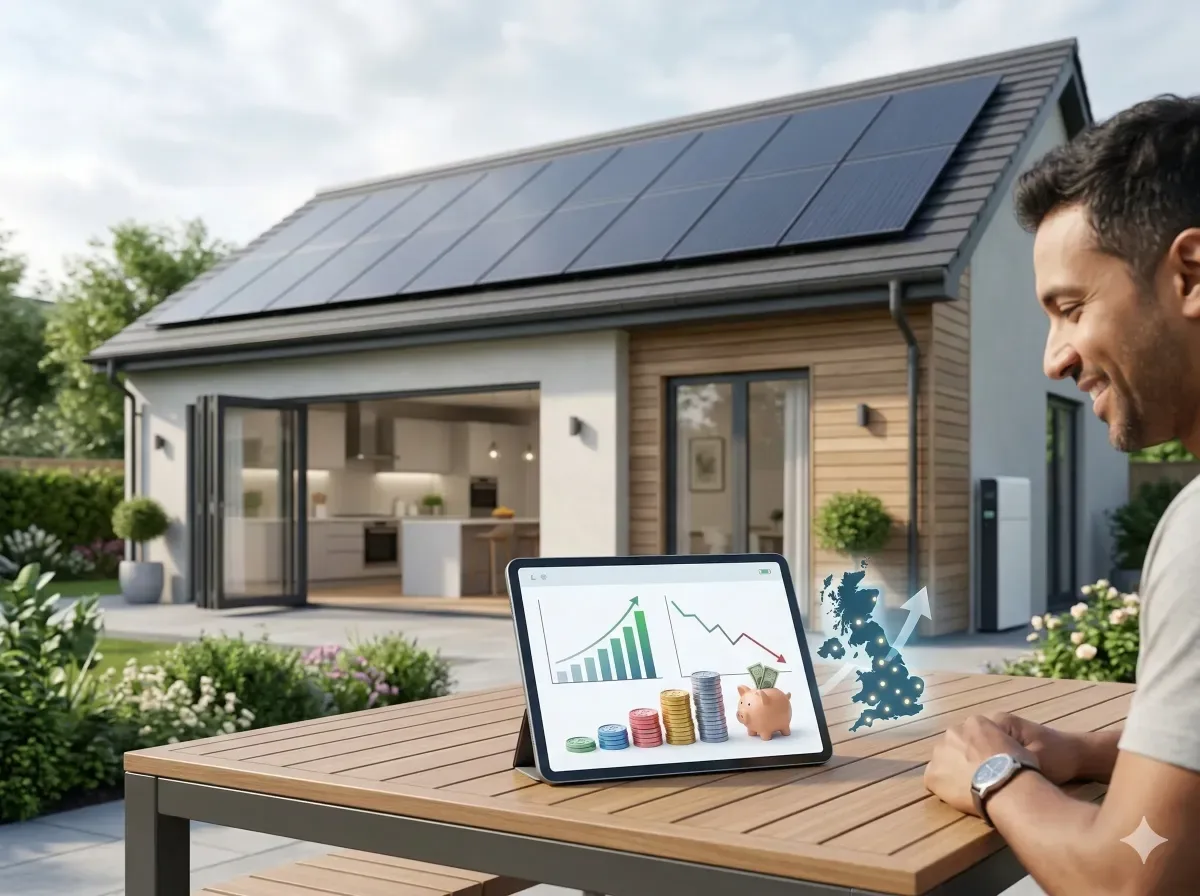
Imagine slashing your energy bills by up to £1,000 a year while doing your bit for the planet—all from your rooftop. In 2026, solar panels are more efficient and affordable than ever for UK homeowners...
The Lifetimes UK editorial team curates, fact-checks, and updates guides on personal finance, property, health, immigration, legal, business, and lifestyle topics relevant to Lifetimes UK readers. Articles are produced with AI assistance and reviewed by the editorial team before publication.
Imagine slashing your energy bills by up to £1,000 a year while doing your bit for the planet—all from your rooftop. In 2026, solar panels are more efficient and affordable than ever for UK homeowners, thanks to cutting-edge technology and supportive government schemes. Whether you're in a sunny spot in the South East or battling clouds in Scotland, the right solar setup can deliver real savings.
Why Solar Panels Make Sense for UK Homes in 2026
Solar energy has exploded in popularity across Britain, with installations up 20% year-on-year as energy prices stabilise around 24p per kWh. Panels now perform brilliantly in our variable weather, generating power even on overcast days. For a typical three-bedroom home using 4,000 kWh annually, a 4kW system could cover 50-70% of needs, depending on location and roof orientation.
Key benefits include:
- Energy independence: Reduce reliance on the grid and avoid price hikes.
- Environmental impact: Cut your carbon footprint by up to 1.5 tonnes of CO2 yearly.
- Property value boost: Solar-equipped homes sell for 4-6% more.
- Low maintenance: Panels last 25-40 years with minimal upkeep.
What Makes the Best Solar Panels for British Weather?
The top panels excel in high efficiency (23-25%), low-light performance for cloudy days, and shade tolerance. Look for N-Type or TOPCon technology, which outperforms older polycrystalline types. Monocrystalline panels remain the gold standard for UK homes, offering the best balance of efficiency and cost. Bifacial models capture reflected light from roofs, adding 5-20% extra output.
Top Solar Panels for UK Homes in 2026
We've rounded up the leading options based on efficiency, warranties, and real-world UK performance. These are ideal for domestic roofs (typically 470-500W panels in portrait stacking).
Premium High-Efficiency Picks
- AIKO Neostar 3S 480W N-Type All Black: Tops efficiency at 24%, with superior shade handling and a 30-year warranty. Perfect for space-limited roofs.
- LONGi Hi-MO X6 Max (480W) or S10 (495W): 24.3% efficiency, excellent low-light and temperature performance. N-Type tech shines in UK conditions.
- REC Alpha Pure-RX (470W Bifacial): Robust build with strong warranties; bifacial design boosts output on light-coloured roofs.
Great Value All-Rounders
- JA Solar N-Type Full Black (450W): Reliable Tier 1 brand, often bundled with Octopus Energy installs. Balances cost and performance.
- Astronergy N7s N-Type Bifacial (450W All Black): Affordable for smaller systems, solid warranties.
For larger roofs, consider higher-wattage bifacials like JA Solar 605W, reducing panel count. Always match to your roof: south-facing at 20-40° pitch is ideal.
Solar Panel Costs in the UK 2026
Expect to pay £5,000-£8,000 for a 4kW system, including installation by MCS-certified pros (required for grants). Breakdown:
| Component | Average Cost |
|---|---|
| 4kW Panels + Inverter | £3,500-£5,000 |
| Battery Storage (10kWh) | £4,000-£6,000 |
| Installation & Scaffold | £1,000-£2,000 |
| Total (with battery) | £9,000-£14,000 |
Prices have dropped 15% since 2025 due to tech advances. Add £500-£1,000 for optimisers if shaded. Get 3-5 quotes via Energy Saving Trust for best deals.
Expected Savings and Payback
A 4kW system generates 3,200-4,000 kWh yearly (London: 3,800 kWh; Edinburgh: 3,200 kWh). At 24p/kWh, that's £768-£960 saved annually, plus 7.5p/kWh Smart Export Guarantee (SEG) for excess power—another £200-£400.
Payback: 7-10 years, then 20+ years of free power. With batteries, self-consume 80% for max savings. Use the PVGIS tool on gov.uk to estimate your output.
Government Grants and Incentives 2026
No upfront grants like the old Feed-in Tariff, but ECO4 and Great British Insulation Scheme offer free/low-cost installs for low-income/pensioner homes. Everyone qualifies for 0% VAT on solar (until 2027).
Smart Export Guarantee (SEG): Earn from exported power. Top rates: Octopus 15p/kWh, E.ON 20p peak.
Check eligibility on Ofgem's SEG register and gov.uk for ECO4.
Installation Tips for UK Homeowners
- Assess your roof: South-facing, unshaded, 10m²+ space. Use online planners from Sunsave or Octopus.
- Choose MCS installers: Ensures quality and grant access. Search via MCS website.
- Add battery: Sunsynk or Tesla Powerwall for 70-90% self-use.
- EV integration: Pair with chargers for cheaper home fueling.
- Maintenance: Clean annually; inverters last 10-15 years (£1,000 replace).
Planning permission rarely needed under permitted development (up to 50% roof coverage).
Next Steps to Go Solar in 2026
Start with a free roof assessment from MCS-certified installers like those recommended by Energy Saving Trust. Compare quotes, check warranties (aim for 25+ years product, 90% output), and calculate savings using Ofgem's tools. With costs falling and incentives strong, 2026 is prime time to invest—lock in savings before rates change. Contact providers today and power up your home sustainably.
Frequently Asked Questions
Sources & References
-
1
Best Solar Panels in the UK Right Now – A Homeowner's Guide — www.optimumelectrics.co.uk
-
2
Best Solar Panels 2026 - Renewable Energy Blogs — blog.spiritenergy.co.uk
-
3
Most Efficient Solar Panels: Top 10 for 2026 — e-verveenergy.co.uk
-
4
The 11 most powerful solar panels [2026] — www.sunsave.energy
-
5
The 9 Types of Solar Panels in the UK | 2026 Comparison — www.theecoexperts.co.uk
-
6
Best Solar Panels 2026: Custom vs Standard | Buyer Guide — couleenergy.com
-
7
Best Solar Panels UK 2026: Top Brands and Models Reviewed — theedinburghboilercompany.com
-
8
UK Government Energy Trends (example for stats) — www.gov.uk
-
9
ECO4 Scheme: Energy Company Obligation — www.gov.uk
-
10
VAT Notice 708/6: Energy-saving materials — www.gov.uk
-
11
Smart Export Guarantee (SEG) — www.ofgem.gov.uk
-
12
Solar Panels on Roofs: Planning Permission — www.gov.uk
Disclaimer: This article was created with the assistance of AI technology and has been reviewed by our editorial team. It is for informational purposes only and does not constitute legal, tax, or financial advice.