Speed Camera Types UK 2026: How Each One Works and Catches You
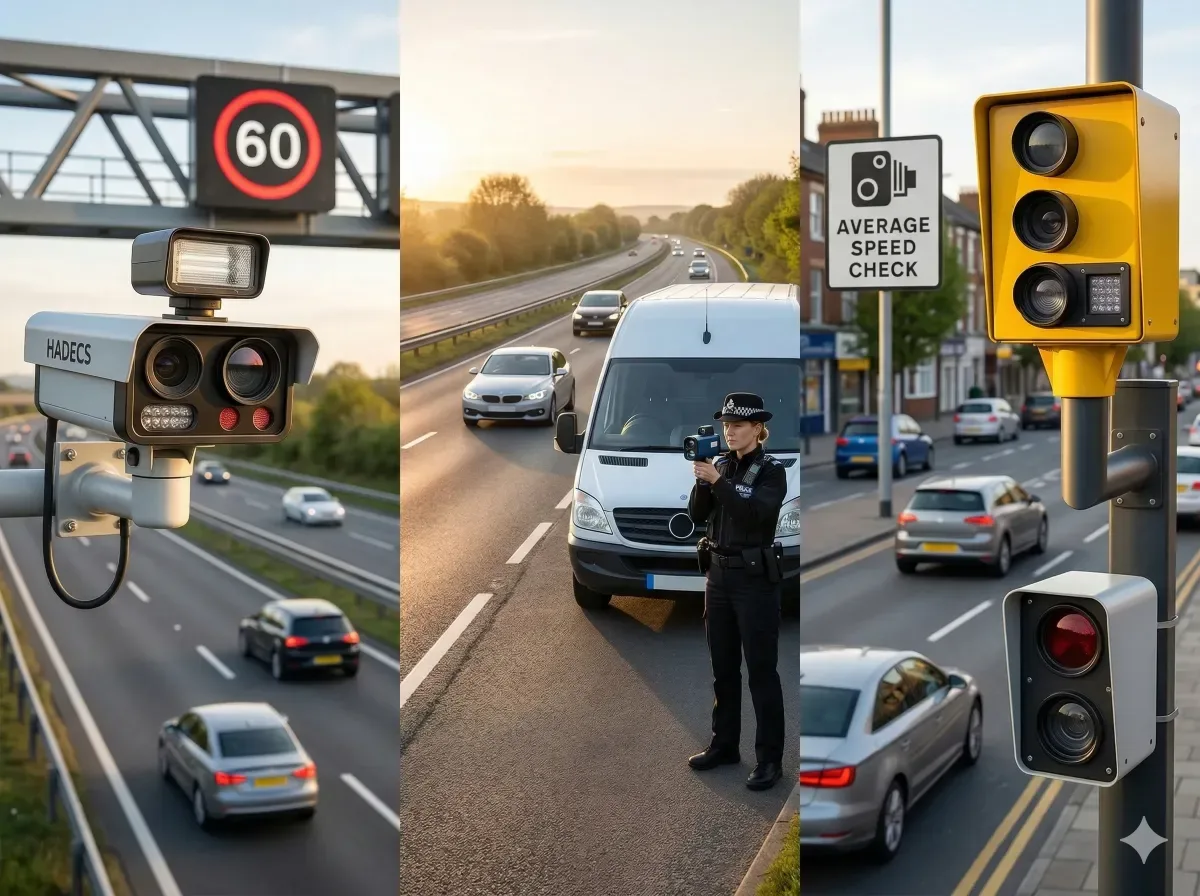
Ever spotted a yellow box lurking on the roadside and felt your foot ease off the accelerator? You're not alone. In 2026, UK roads are patrolled by an arsenal of sophisticated speed cameras, from trad...
The Lifetimes UK editorial team curates, fact-checks, and updates guides on personal finance, property, health, immigration, legal, business, and lifestyle topics relevant to Lifetimes UK readers. Articles are produced with AI assistance and reviewed by the editorial team before publication.
Ever spotted a yellow box lurking on the roadside and felt your foot ease off the accelerator? You're not alone. In 2026, UK roads are patrolled by an arsenal of sophisticated speed cameras, from traditional Gatsos to cutting-edge AI-powered 4D units, all designed to keep our motorways and high streets safer. Understanding speed camera types UK 2026: how each one works and catches you could save you points on your licence and a hefty fine.
With over 7,500 fixed speed cameras and countless mobile units across Britain, speeding remains the most common motoring offence, leading to 1.7 million tickets annually. This guide breaks down the main types, explains their technology, and shares practical tips to stay legal. Whether you're cruising the M25 or navigating village lanes, knowing how these devices operate empowers you to drive confidently.
The Evolution of Speed Cameras in the UK
Speed enforcement has come a long way since the first Gatso appeared in 1992. Today's systems leverage AI, ANPR (Automatic Number Plate Recognition), and radar for pinpoint accuracy, even in poor weather. In 2026, smart motorways and residential zones see the latest deployments, with HADECS 3 and Redspeed Sentio leading the charge against not just speeding, but also phone use and seatbelt offences.
Under the Road Traffic Offenders Act 1988, exceeding the limit by just 1mph can trigger a Notice of Intended Prosecution (NIP) within 14 days. Fines start at £100 and 3 penalty points, rising to £1,000 or more for serious cases, plus potential disqualification.
Main Speed Camera Types UK 2026: Fixed Instantaneous Cameras
These catch you at a single point. They're the classic yellow boxes you'll spot on poles or gantries.
Gatso (Gatsometer Type 24)
The UK's most common fixed camera, with over 3,000 units nationwide. It uses radar to detect speed and two induction loops in the road to confirm it. If you're over the limit, a rear-facing flash captures your number plate and vehicle details twice for calibration.
How it catches you: No front view of the driver, but the double photo proves speed accurately. Look for the squat yellow box with a square lens—it's always active.
- Range: Single lane, rear-facing.
- Locations: Urban roads, A-roads like the A45 in Northamptonshire.
- Tip: Slow down on approach; the flash is visible at night.
Truvelo Combi
Forward-facing for driver identification, using four piezo sensors embedded in the road. It snaps your face and plate with an infrared or magenta flash that's less dazzling.
How it catches you: Sensors measure time between lines painted on the road. Calibration markers ensure precision. Round lens distinguishes it from Gatso.
- Range: Approaching traffic, multiple lanes.
- Locations: High-risk areas like school zones in Bristol.
- Tip: No visible flash often, so assume it's watching.
Average Speed Cameras: No Point Braking Late
These measure your speed over distance, preventing sudden slowdowns. ANPR links entry and exit photos.
SPECS and VECTOR
SPECS3 systems pair cameras miles apart, calculating average via ANPR and known distances—up to 100 miles on the A9 in Scotland. VECTOR, similar but versatile, enforces bus lanes too; yellow for speed, grey for others.
How they catch you: No flash; infrared works 24/7. If your average exceeds the limit, NIP follows.
- Range: Multi-mile stretches.
- Locations: M6, M42 smart motorways.
- Tip: Maintain steady speed throughout the zone.
REDFLEX and Siemens SafeZone
REDFLEX uses dual radar for up to six lanes, doubling as red-light cameras. Siemens SafeZone monitors neighbourhoods via 4G ANPR networks.
How they catch you: High-res digital imaging processes averages in real-time.
Motorway and Smart Motorway Cameras
HADECS 3 and HADECS 3X
Stealthy on gantries, these read variable limits from signs via extra cameras, enforcing dynamically. No road loops needed; radar and digital tech handle it.
How it catches you: Captures Red X violations too. External verification unit ahead confirms gantries.
- Locations: M1, M25 smart sections.
- Tip: Obey gantry signs religiously.
Mobile and Cutting-Edge Speed Cameras 2026
Police vans and handheld devices offer flexibility.
LTI 20-20 UltraLyte and Truvelo Lasercam 4
Laser guns pulse light to gauge distance changes. Operated by trained officers from vans or handheld.
How they catch you: Spot speed over 300m; photo evidence included.
AI 4D Radar and Redspeed Sentio
2026's stars: 4D tracking monitors multiple lanes without sensors or flash. Sentio uses 4K colour cams for speed, phones, seatbelts. VECTOR SR adds video grids.
How they catch you: AI scans inside vehicles; enforces five lanes bidirectionally.
- Tip: Hands-free only; buckle up—no excuses.
How Speed Cameras Issue Fines and Points
Evidence goes to operators, then DVLA for keeper details. You'll get a NIP within 14 days, followed by a conditional offer or court summons. In Scotland, it's a fixed penalty; England/Wales allows speed awareness courses for minor offences (SP30 code).
2026 updates: AI cams integrate with central servers for faster processing, tripling detections on smart motorways.
Practical Tips to Avoid Speed Camera Fines
- Know limits: 20mph zones rising to 9,000+ by 2026.
- Use apps like Waze for alerts (legally).
- Check signs: Variable limits override nationals.
- Maintain vehicle: Tyres, lights affect readings.
- Challenge if needed: Via gov.uk if NIP errors.
Stay Safe on UK Roads
Speed cameras aren't out to trap you—they save lives, cutting casualties by 40% on enforced routes. Drive at the limit, stay alert, and check your speedometer regularly. Next steps: Download the AA or RAC route checker app, review gov.uk for local cameras, and consider a dashcam for evidence. Safe motoring!
Frequently Asked Questions
Sources & References
-
1
15 Types Of Speed Cameras UK Drivers Must Know In 2026 — localbusinessmagazine.co.uk — www.localbusinessmagazine.co.uk
-
2
Every type of speed camera in the UK revealed - What Car? — www.whatcar.com
-
3
Types of speed cameras — avonandsomerset.police.uk — www.avonandsomerset.police.uk
-
4
17 common types of speed camera in the UK - Carwow — www.carwow.co.uk
-
5
Common Types of Speed Camera Used in the UK — topdeals4wheels.com — www.topdeals4wheels.com
-
6
Motorway cameras - what you need to know — rac.co.uk — www.rac.co.uk
- 7
-
8
Road speed limit enforcement in the United Kingdom — wikipedia.org — en.wikipedia.org
Disclaimer: This article was created with the assistance of AI technology and has been reviewed by our editorial team. It is for informational purposes only and does not constitute legal, tax, or financial advice.