Car Finance UK 2026: PCP vs HP vs Personal Loan Explained
Ever fancied driving off in your dream car without the hefty upfront cost, but baffled by the jargon of car finance options? In 2026, with rising living costs and evolving UK regulations, choosing bet...
The Lifetimes UK editorial team curates, fact-checks, and updates guides on personal finance, property, health, immigration, legal, business, and lifestyle topics relevant to Lifetimes UK readers. Articles are produced with AI assistance and reviewed by the editorial team before publication.
Ever fancied driving off in your dream car without the hefty upfront cost, but baffled by the jargon of car finance options? In 2026, with rising living costs and evolving UK regulations, choosing between **PCP**, **HP**, and a **personal loan** is crucial for Brits looking to finance sensibly.
This guide breaks down **Car Finance UK 2026: PCP vs HP vs Personal Loan Explained**, helping you weigh costs, ownership, and flexibility to make an informed decision tailored to your lifestyle.
What is PCP Car Finance?
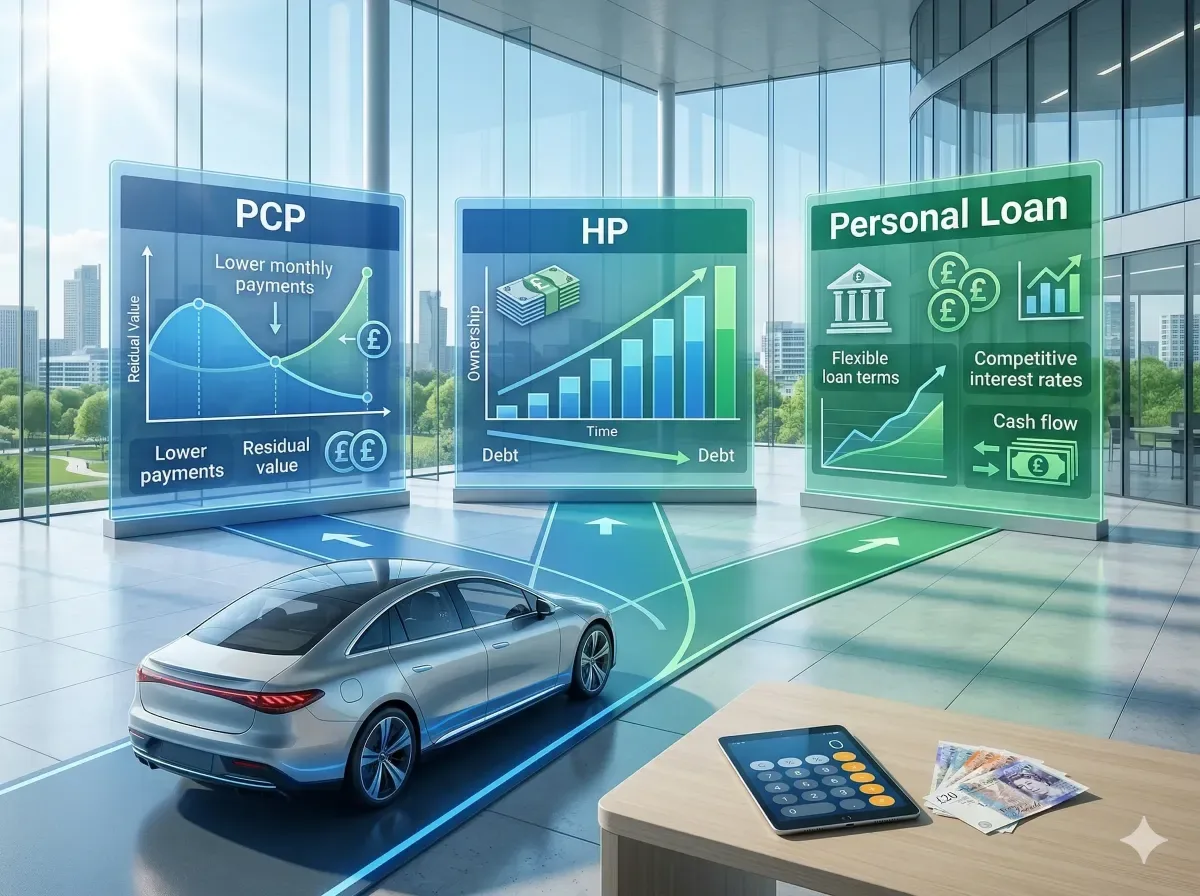
Personal Contract Purchase (PCP) is a popular choice for those who love upgrading to a new model every few years. You pay a deposit, followed by lower monthly payments that cover the car's predicted depreciation, not its full value. At the end of the term (typically 2-4 years), you have three options: return the car (if within mileage and condition limits), pay a balloon payment (Guaranteed Minimum Future Value or GMFV) to own it, or part-exchange for another.
PCP suits frequent changers because you avoid depreciation worries – just hand it back. However, expect mileage caps (e.g., 8,000-10,000 miles/year) with excess fees, and strict condition checks for damage or wear. In 2026, manufacturer deals often bundle servicing, keeping costs predictable.
Pros and Cons of PCP
- Lower monthly payments: Often £250 for a £20,000 car over 3 years with 10% deposit.
- High flexibility at term end.
- Smaller deposits than HP.
- Mileage limits and condition rules apply.
- Higher total interest due to balloon.
What is HP Car Finance?
Hire Purchase (HP) is straightforward for those wanting outright ownership. The finance company owns the car until you complete payments, including a deposit and fixed monthly instalments covering the full amount plus interest. At the end, the car is yours – no balloon, no extras.
Ideal for long-term keepers, HP has no mileage limits or damage charges during the term, and works for new or used cars. Monthly payments are higher (e.g., £350 for the same £20,000 car), but you build equity faster with lower overall interest. Regulated by the Financial Conduct Authority (FCA), early settlement is possible with a rebate under the Consumer Credit Act.
Pros and Cons of HP
- Automatic ownership at end.
- No mileage or condition restrictions.
- Simpler structure.
- Higher monthly costs.
- Less flexibility for upgrades.
What is a Personal Loan for Car Finance?
A personal loan lets you borrow a lump sum from a bank or lender, buy the car outright, and own it immediately – no finance company involvement. Repay over 1-7 years with fixed rates, often unsecured (based on credit score) or secured against assets. In 2026, average APRs hover around 6-10% for good credit, per FCA data.
This option shines for used cars or if you dislike tied agreements. Shop via comparison sites like MoneySuperMarket, but watch total interest – it could exceed HP/PCP if rates are high. No mileage limits, full control from day one, but risk personal liability if you default.
Pros and Cons of Personal Loans
- Own the car outright from start.
- Flexible use of funds.
- No early repayment penalties often.
- Higher APR possible for poor credit.
- No deposit typically needed.
PCP vs HP vs Personal Loan: Side-by-Side Comparison
Here's a clear breakdown for a typical £20,000 car in 2026 (3-year term, 10% deposit, assuming 7% APR):
| Feature | PCP | HP | Personal Loan |
|---|---|---|---|
| Monthly Payment | Lower (~£250) | Higher (~£350) | Varies (~£300-£400, full amount financed) |
| Ownership | Optional (balloon ~£7,000) | Automatic at end | Immediate |
| Mileage Limit | Yes (excess fees) | No | No |
| Deposit | Yes, smaller | Yes | Optional |
| Total Interest | Higher (on balloon) | Lower | Depends on term/APR |
| Flexibility | High (return/swap) | Low | High (sell anytime) |
PCP wins for low payments and swaps; HP for ownership without fuss; personal loans for total freedom. Factor in your mileage, plans, and credit – use FCA-regulated brokers for best rates.
Costs and Examples in 2026 UK Market
For a £25,000 new Ford Fiesta: PCP might be £299/month (36 months, 10k miles/year, £12,500 balloon); HP £450/month owning outright; personal loan £520/month over 48 months at 7.5% APR. Add Road Tax, Insurance (check MoneySavingExpert), and VED changes post-2025.
Interest rates in 2026 average 6-9% amid Bank of England base rate stability. Always get a soft eligibility check to avoid credit dings. Bad credit? Specialist lenders assess affordability.
Key Factors to Consider Before Choosing
Your Driving Habits
High mileage? Skip PCP – opt for HP or loan.
Long-Term Plans
Keep forever? HP or loan. Upgrade often? PCP.
Credit and Affordability
Check free via Experian. FCA caps total charge for credit (TCC) at 100% of borrow amount. Budget 20% income for car costs.
UK Regulations and Protections
All regulated by FCA; 14-day cooling-off for distance sales. Mis-selling claims via Financial Ombudsman rising in 2026.
Next Steps: Secure Your Ideal Car Finance Deal
Compare quotes from FCA-authorised providers like those on Carwow or dealer sites. Run affordability calculators, check eligibility, and read the Key Facts Illustration. Consult free advice from MoneyHelper (moneyhelper.org.uk) or StepChange for budgeting. Drive smart – the right finance keeps you on the road without regrets.
Frequently Asked Questions
Sources & References
-
1
Experian: What is the difference between PCP and HP car finance options? — www.experian.co.uk
-
2
Carwow: PCP vs HP finance: which is best for you? — www.carwow.co.uk
-
3
LMC Cars: PCP vs HP – Which Car Finance Option Is Right for You? — www.lmc-cars.co.uk
-
4
Carmoola: PCP vs HP car finance: what's the difference and which is better? — www.carmoola.co.uk
-
5
StartRescue: Is Car Finance Still Worth It in 2026? — www.startrescue.co.uk
-
6
AutoTrader: PCP vs HP: Which Is Best For You? — www.autotrader.co.uk
-
7
Electrifying: PCP or HP? Understand the different car financing options — www.electrifying.com
-
8
Toyota UK: Personal Contract Purchase (PCP) — www.toyota.co.uk
Disclaimer: This article was created with the assistance of AI technology and has been reviewed by our editorial team. It is for informational purposes only and does not constitute legal, tax, or financial advice.